
- Men’s lifespan is five years shorter than women’s, on average
- Men are three times more likely to die of an overdose
- Men are four times more likely to commit suicide
- In 2024, only 37% of men held college degrees compared to 47% of women in the 25-34 age group
- The share of men in the workforce has dropped more than 10%
- Paradoxically, men tend to be happier than women today, though both genders’ happiness has plummeted since COVID. (More on this at the bottom)
To reach the heart of the fatherless homes and the masculinity crisis conversations, you have to understand the context. Yeah, context is important. If someone tells you to “watch your step,” you don’t spend the rest of the day staring at your feet as you walk. You understand the context.
The context here is straightforward. Fatherless homes are not the result of the mythological “deadbeat” dad, a ridiculous and insulting term that fails to describe the problem. Like many insulting and false terms, deadbeat dad rose from a horrendous misunderstanding of child support and gender bias. We’ll get more into that later.
No one can deny that fatherless homes exist, the issue keeps growing, and a significant masculinity crisis has emerged—all driven by political and cultural developments that people not only failed to foresee but also exploited for political power. Before we can properly put things into perspective, however, we need to pull back the curtain and have a look at the numbers.
Fatherless Homes Statistics in the U.S.
Roughly one in every four children is raised in a fatherless home, which amounts to nearly 18 million children throughout the U.S.
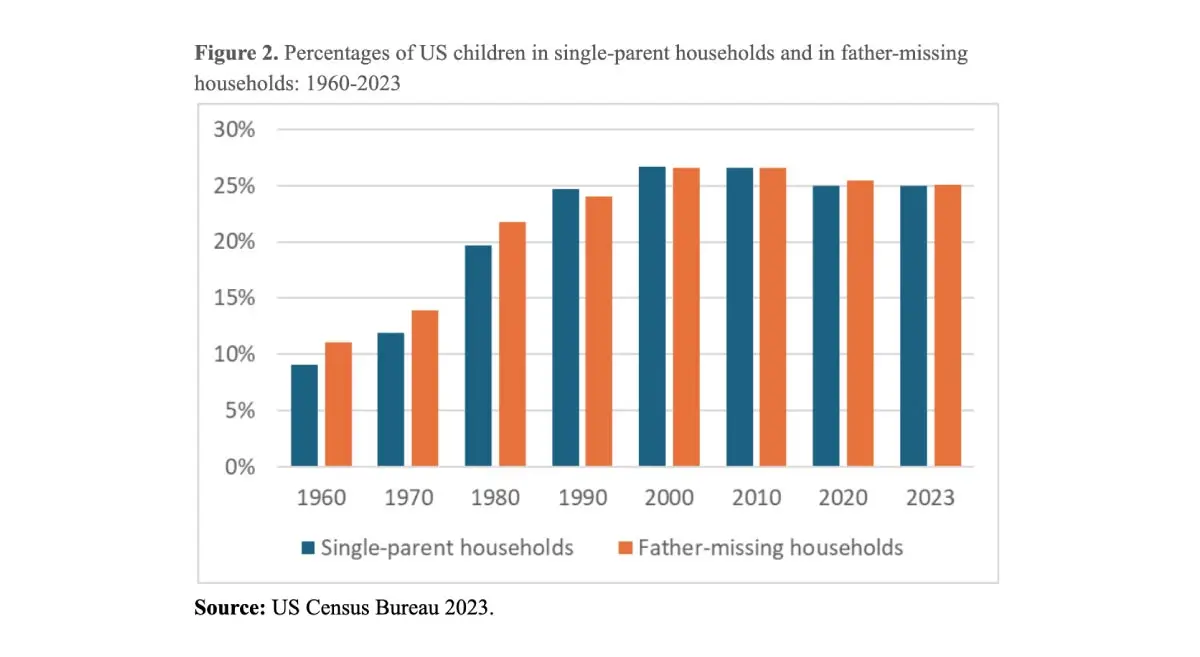
The numbers vary by race, skyrocketing to 50% of black children. For white and Hispanic children, the percentages sit at 20% and 29% respectively. Unfortunately, 40% of all births in 2022 came from unmarried women, according to data from the CDC. Cohabitation breakdowns, divorce, unemployment, incarceration, and low education are the driving factors.
Masculinity Crisis Statistics in the U.S.
One of the most interesting facts about the masculinity crisis in the United States is how women view it. While 86% of men define “manhood” as being a provider, 77% of women do so as well. These figures are based on a survey conducted by Equimondo Center for Masculinities and Social Justice.
The 77% number is interesting, especially considering the “emotional intelligence” factor. Emotional intelligence is little more than the psychology fad of the day. It sounds interesting, but it is little more than a hodgepodge of already existing traits that are measurable and useful against the various obstacles life throws at us.
Women want men to be the provider, yet also be more emotionally open, do more at home, and
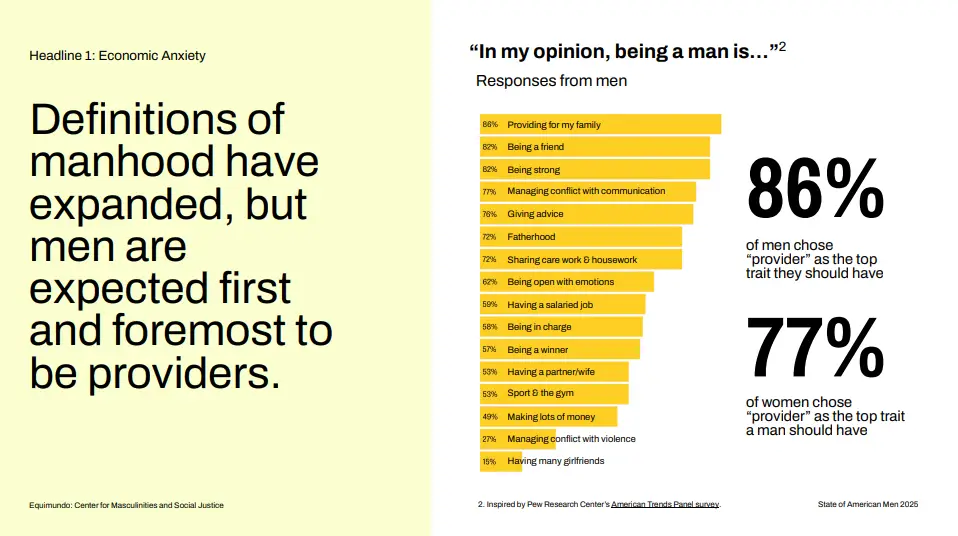
Despite the movement towards independence in the home and workplace, the vast majority of women still view men through a traditional lens. However, women’s lifestyle and how they view men cannot coexist without creating friction in the home.
For men, economic anxiety is the most consistent worry across the board. But it doesn’t end with feelings of financial inadequacy. Men are more likely to foster thoughts of suicide, check out altogether, self-isolate, or turn to violence. It’s an internal battle of extremes, and severe frustration is the inevitable result.
How Fatherless Homes Shape the Masculinity Crisis
I’m sure most of you are familiar with the statistics here or, at the very least, understand the negative impact in general terms.
- Children in fatherless homes are twice as likely to suffer from mental health issues
- 90% of homeless and runaway children come from fatherless homes
- 63% of youth suicides are from fatherless homes
- 70% of juveniles in state-operated institutions are from fatherless homes
- Schools expel or suspend kids from fatherless homes 2 to 3 times more often than those with fathers.
- Girls in fatherless homes before the age of 5 are 8 times more likely to become pregnant as a teen
Fatherless homes and juvenile delinquency are inextricably linked, and it only gets worse passing into adulthood.
What are the Root Causes of Fatherless Homes and the Masculinity Crisis?
Once upon a time, feminism was a woman’s movement. No longer. Now, it is the beating heart of nearly all major social, economic, and cultural problems in the United States, including the absence of fathers in the home. No, this is not a knock against women’s rights or the issues that women faced leading into feminism’s first wave.
Like everything that the government touches, it became a twisted nightmare of itself, casting off the premise of women’s rights in favor of power consolidation amongst political leaders. Feminism is no longer a women’s rights movement; it’s a tool, empowered with the task of destroying nuclear families and impoverishing men while replacing them with the state.
No-Fault Divorce
Bringing this up in a negative light immediately invites harsh backlash, mostly because people use the strawman argument known as “domestic abuse.” Advocates once used domestic abuse as the original strawman to push no-fault divorce through, allowing it to spread from state to state until it became the norm.
What no-fault divorce proponents ignore is that domestic abuse is a crime and a fault. Without no-fault divorce, domestic abuse would be grounds for a divorce, not to mention the legal repercussions for the perpetrator. What they also ignore is the domestic abuse rate, and conveniently so. It hasn’t changed much and may be worse in some areas.
There were no meaningful measurements on domestic abuse before the 1990s, with the 1994 Violence Against Women Act, which was a far more meaningful curb against domestic violence than no-fault divorce. Proponents of no-fault point to the decrease in domestic violence without mentioning the Violence Against Women Act or the substantial legal changes since.
Worse, no-fault divorce plays directly into a domino effect of negative consequences, almost entirely focused on men. It is ultimately the catalyst for a generational decay in masculinity and fathers’ absence from the home.
Social Security Title IV-D
In a “break up the home and replace the father” design, no-fault divorce plays the “break up” role, while SS Title IV-D takes care of the latter. This insidious federal grant encourages states to not only break up the home, but also to reduce the father’s time with his children to the least possible.
Here’s how it works: Federal grant pools are made available to states based on the amount of child support successfully collected each year and the number of successful collections. This is where the weekend dad came from. To maximize potential gains in federal funding, states must decrease the father’s time with his children because this allows for a higher child support order.
A fifty/fifty shared custody arrangement does not bring in as much as a two-weekend-a-month, partial custody arrangement. According to the Office of Child Support Services (because there is an office for everything nowadays), the total national Title IV-D collections for 2024 amounted to $34.6 billion.
Because states use Title IV-D to fund single mothers—who receive custody in 90% of cases—the system has effectively replaced the father as the home’s provider, while still forcing him to pay child support and preventing him from claiming his children as dependents on tax returns.
Child’s Best Interest Standard
First and foremost, this is not an objective standard. It’s the excuse by which judges remove fathers from their children’s lives, hammer the fathers with maximum child support payments, and tell the fathers that they can have four days a month.
The Child’s Best Interest standard is better defined as the Judge’s best interest. In a room of five people, not a single one will completely agree on what a child’s best interest is, much less define it in a legally coherent manner. Judges are all different, and they all view “best interests’ differently as well.
SS Title IV-D is the devil on the judge’s shoulder, in most cases, with the judiciary looking out for what’s in the state’s best interest, rather than the child’s. Unless the state can prove that the father is unfit, there should never be an instance where 50/50 isn’t the logical result.
Myth of the Deadbeat Dad
Why bring this up? Because it has a direct impact on the masculinity crisis in America. It’s a highly generalized label because it includes most fathers who are not unwilling, but incapable of affording the cost. Roughly 66% of unpaid child support from fathers is due to inability to pay, not financial abandonment.
The system doesn’t care why, and fathers who fail to pay are subject to indentured servitude, unable to defend themselves because it takes place in a civil court, not a criminal one. Worse, when the matter is flipped, and the mother is not the custodial parent, she is less likely to pay child support and will not face similar consequences for failure to do so.
The Current State of Masculinity and Fatherless Homes
Some prefer to label this as a crisis of opportunity, rather than a crisis of masculinity. While there’s some truth to the “crisis of opportunity” point, we’re simply living in a time where men are excluded in the name of political expediency and power.
Take SS IV-D, for example. There is no escaping the fact that this is a system specifically engineered for reducing men in the home and replacing them with state benefits. The idea that children will starve without child support is ridiculous in the face of this fact. The state doesn’t come after fathers because they are failing to pay child support.
They come after fathers to recoup the state’s insane spending levels and to boost the prospects of receiving more grant money annually. Society actively rejects men from the family, bombards them with insulting propaganda, calls them useless for struggling to relate emotionally, and labels them misogynistic, racist, or homophobic whenever their political opinions conflict with the latest Instagram trends.
Point to a commercial that doesn’t feature an insipidly ridiculous caricature of a man, plodding through life, dumb as a brick, wholly incapable of critical thinking. In the meantime, women demand emotional openness and leave men who exhibit that same behavior. Damned if you do, damned if you don’t.
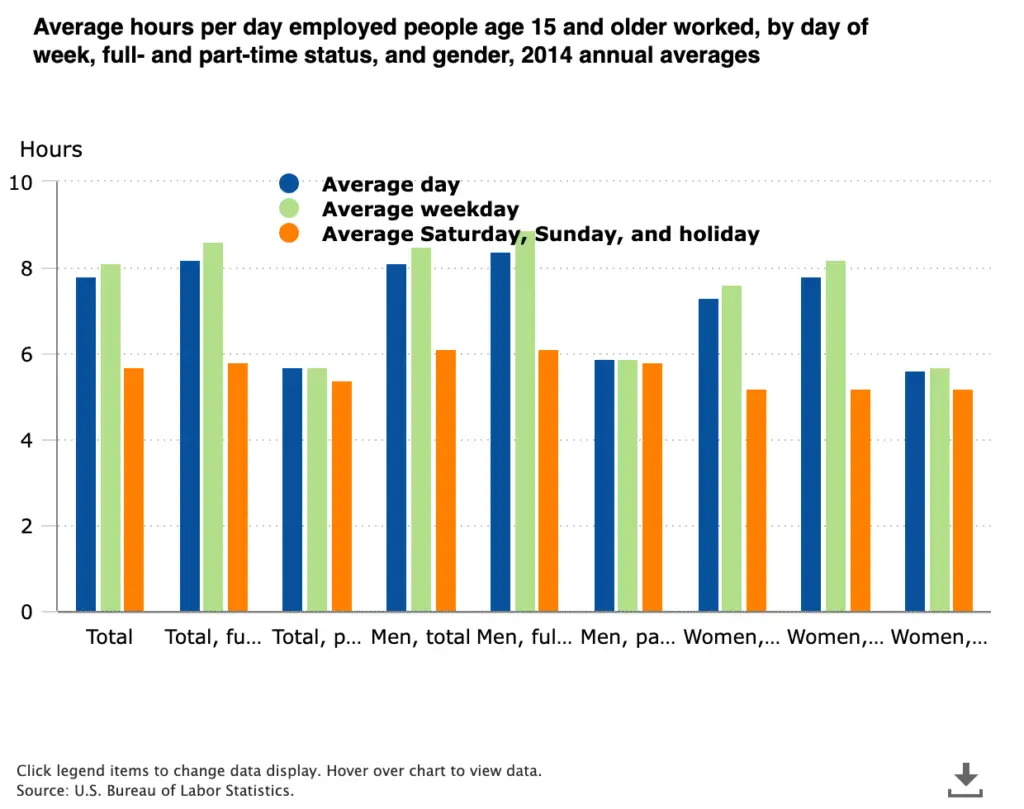
Men spend a significant amount of time at work, more so than women, even in the same job categories. At the same time, they are excoriated for making more money, even though the so-called “gender pay gap” is reliant on excluding men’s extra work, overtime, and preference for not taking time off.
What Can Men Do?
The idea that voting is going to change anything is naive, at best. The current system benefits state/federal interests, which means its politicians benefit, and aren’t likely to sympathize unless their own power or financial status is at stake. However, men aren’t exactly unarmed in the face of all this madness.
Prenuptial/Postnuptial Agreements
The former is easier than the latter, for obvious reasons. But men need to begin seriously considering prenuptial agreements. Cast aside the indignity you think it will bring to your future wife and remember: The vast majority of divorce filers are women, and the vast majority of the reasons are “unhappiness,” which can mean virtually anything (one of the many joys of no-fault divorce).
Absolutely anything is game in the battle of divorce excuses where women are concerned. One wrong move on your part, and she’s gone, along with a massive chunk of everything you’ve earned. Prenuptial agreements are valid in all 50 states. Get one. If she walks, you know who she is, no matter how much you thought the opposite before.
Unless fraud or coercion can be proven in a court of law, prenuptial agreements are typically upheld.
Cohabitation Contracts (Marvin Agreements)
Believe it or not, non-marital partners can draft contracts for property division and some benefits without having to be married. Again, disregard her indignity in this. We do not live in that world, no matter how much we wish. Marvin agreements are very useful for long-term relationships, but get one as soon as possible and don’t wait until after the first child arrives.
Child Support and Fatherless Homes Struggles
Seek shared custody upfront and do not accept no for an answer. This is the time to push hard for 50/50. The later it gets and the older the child gets, 50/50 becomes more and more difficult until at last, it’s just another shitty pipe dream.
Use paternity testing. Use paternity testing. I don’t know how many times I need to say it because it really needs to hit home. There’s a high suspicion of 25 to 30% in paternity dispute cases, and it’s worthwhile to make sure. Too many dads have been burned with 18+ years of child support only to discover the child isn’t theirs.

The number of fatherless homes and the masculinity crisis are indeed issues, and serious ones at that. But that doesn’t mean men need to be willing participants in it. If you do want to participate, armor yourself beforehand. Prepare yourself for the potential endgame. Hope for the best. Prepare for the worst.